Hot weather can make a home uncomfortable even when the air conditioner is running regularly. Rooms with large windows may heat up quickly, upstairs areas can feel warmer than lower floors, and poor insulation can allow outdoor heat to move indoors. When these problems continue, the cooling system may need to work harder and run for longer periods, which can affect comfort and energy use.
Making a few practical improvements around the home can help reduce the amount of heat entering indoor spaces and make cooling more effective. Regular AC repair and maintenance from local technicians can also help ensure the cooling system is operating properly. Looking at both the house and the AC system can make a bigger difference than relying on the thermostat alone.
Start With the Air Conditioning System
The condition of the air conditioner has a direct effect on indoor comfort during hot weather. A system with restricted airflow, dirty components, low refrigerant, or worn electrical parts may have difficulty removing enough heat from the home. Instead of reaching the desired temperature efficiently, the system may continue running for long periods while some rooms still feel warm.
Regular maintenance gives homeowners an opportunity to identify these problems before they become major disruptions. For example, an AC that used to cool the house within a reasonable amount of time but now runs almost constantly may be showing signs that something has changed. A professional can check the system, inspect important components, and determine whether the problem is related to maintenance, airflow, or a part that needs repair.
Improve Insulation in Hot Areas
Insulation helps slow the movement of heat between the outdoors and indoors. If certain parts of the home have inadequate insulation, those areas can become noticeably warmer during the hottest part of the day. This is particularly common in upper floors and rooms located directly beneath an attic or roof.
The attic is one of the most important areas to consider because the roof receives hours of direct sunlight. Heat can build up in the attic and gradually move towards the living spaces below when insulation is insufficient. Adding or improving insulation in these areas can help create a stronger barrier between the hot attic and the rooms underneath. It may also help the AC maintain indoor temperatures without having to compensate for as much heat entering from above.
Keep Direct Sunlight Under Control
Sunlight can quickly increase the temperature inside a room. Large windows that receive direct afternoon sun can be particularly challenging because they allow solar heat to enter during the hottest part of the day. A room may feel comfortable in the morning and then become noticeably warmer by mid-afternoon.
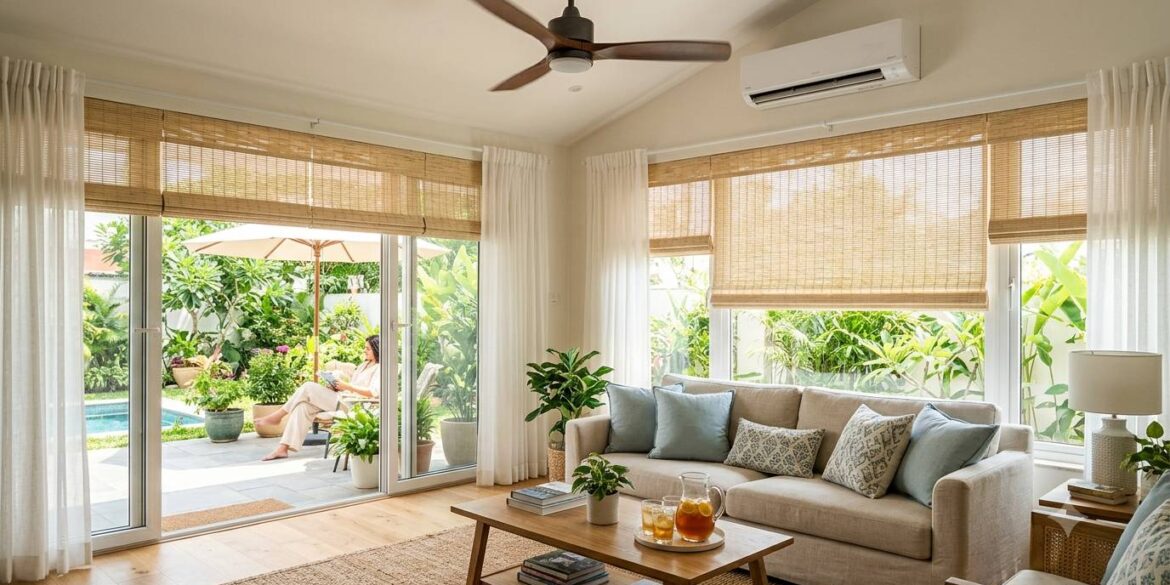
Simple window coverings can help reduce this effect. Closing blinds, curtains, or shades before the strongest sunlight reaches the windows can limit some of the heat entering the room. Exterior shading can also be useful. Trees, awnings, covered patios, and other structures can reduce direct sunlight before it reaches the glass.
For example, if a west-facing living room becomes uncomfortable every afternoon, keeping the curtains closed during peak sunlight hours may make a noticeable difference. This can reduce the amount of heat the AC needs to remove later.
Seal Gaps Around Doors and Windows
Small gaps around exterior doors and windows can allow warm outdoor air into the home. At the same time, cooled indoor air can escape through those openings. Individually, these gaps may seem insignificant, but several poorly sealed areas can contribute to unwanted heat gain and make certain rooms harder to cool.
Older weatherstripping, cracked caulking, worn door seals, and gaps around window frames are worth checking. Replacing damaged weatherstripping or sealing visible cracks can improve the home’s ability to keep conditioned air inside. These improvements are especially useful in older properties where seals may have deteriorated over time.
Homeowners may notice the problem because a room feels warmer near a particular door or window. They may also notice drafts when the AC is running. Addressing these areas can help the cooling system maintain a more stable indoor temperature instead of constantly compensating for outside air entering the home.
Improve Airflow Around the Home
Even a properly working AC cannot cool a home effectively if conditioned air cannot move freely. Furniture, curtains, rugs, or other objects placed directly over supply vents can restrict airflow and prevent cooled air from reaching the room properly. This can create noticeable temperature differences between rooms.
Return grilles also need enough open space because they allow indoor air to travel back towards the HVAC system. Blocking a return grille with furniture, shelving, or other items can interfere with circulation and make the system work harder. Homeowners should keep both supply vents and return grilles reasonably clear.
Ductwork should also be considered when airflow problems continue. Leaking, damaged, poorly connected, or inadequately insulated ducts can affect how much cooled air reaches different parts of the home. If one bedroom remains warm while nearby rooms are comfortable, checking the airflow and ductwork may be more useful than simply lowering the thermostat.
Make Your Kitchen Produce Less Indoor Heat
Cooking can add a surprising amount of heat to the home during hot weather. Ovens, stovetops, air fryers, and other appliances generate heat while they’re operating. In homes with open kitchens connected to living and dining areas, that heat can spread quickly through the main living space.
Using a kitchen exhaust fan while cooking can help remove heat, moisture, and cooking fumes from the room. When practical, homeowners can also choose smaller appliances that produce less heat or move some cooking outdoors during especially hot periods. Preparing meals that don’t require long oven use can also reduce the amount of heat released indoors.
For example, running the oven for an hour during the hottest part of an afternoon can make the kitchen and surrounding rooms considerably warmer. Reducing oven use during peak heat gives the AC less additional warmth to remove and can make the home more comfortable.
Check the Roof and Attic
The roof receives direct exposure to sunlight and can become one of the hottest parts of a home. Problems with insulation, ventilation, or air sealing in the attic can allow some of that heat to affect the living spaces below. This is one reason upper-floor rooms can sometimes feel significantly warmer than rooms downstairs.
If bedrooms or other upstairs areas consistently become uncomfortable during the afternoon, the attic may be worth examining. Proper insulation can reduce heat transfer, while suitable attic ventilation can help manage heat and moisture in the space. These improvements should be considered alongside the home’s overall construction and existing ventilation system rather than treated as a one-size-fits-all solution.
Roof condition also matters. Damaged roofing materials or areas that allow moisture to enter can affect insulation and other parts of the attic. Water-damaged insulation may not perform as intended, so roof and attic concerns should be addressed before they create larger problems.
Use Ceiling Fans for Extra Comfort
Ceiling fans don’t lower the actual temperature of a room, but they can improve how comfortable it feels by moving air across the skin. This creates a cooling sensation that can make occupants feel more comfortable at a slightly higher thermostat setting.
Fans are most useful in rooms that are regularly occupied. For example, a ceiling fan in a bedroom can help distribute air while someone is sleeping, while a fan in a living room can improve comfort while the family is using the space. There’s little benefit to running fans continuously in empty rooms because they don’t actually reduce the temperature of the space.
Ceiling fans should therefore be viewed as a supplement to the AC rather than a replacement for proper cooling. They work best when combined with an appropriately maintained air conditioning system.
Manage Humidity Indoors
High humidity can make warm temperatures feel even more uncomfortable. When there is too much moisture in the indoor air, sweat doesn’t evaporate as easily from the skin, which can make a room feel warmer than the thermostat reading suggests.
Air conditioning naturally removes some moisture while cooling the home. However, excessive indoor humidity may indicate that the AC isn’t removing moisture effectively, that the system is not running long enough, or that moisture is entering the house from another source. Condensation around windows, musty smells, damp areas, or rooms that continue to feel sticky can all be reasons to investigate further.
Controlling moisture can improve comfort and help protect parts of the home from moisture-related problems. Bathrooms, kitchens, basements, and poorly ventilated areas deserve particular attention because everyday activities such as showering and cooking can add significant moisture to indoor air.
Use the Thermostat Carefully
Constantly changing the thermostat won’t necessarily make a home cool faster. Setting the temperature extremely low can simply cause the system to run for a longer period while providing no immediate shortcut to reaching a comfortable temperature.
A consistent thermostat setting can help the system operate more predictably. Programmable or smart thermostats can also make temperature management easier by adjusting settings around daily routines. For example, homeowners can allow the temperature to rise somewhat while everyone is away and return to a more comfortable setting before people come home.
The best approach depends on the household, the home’s insulation, outdoor temperatures, and the AC system itself. The goal is to avoid unnecessary temperature changes while still maintaining a comfortable indoor environment.
Keep the Outdoor AC Area Clear
The outdoor AC unit needs adequate space around it so air can move through the system and heat can be released. Leaves, grass clippings, branches, weeds, and other debris can interfere with airflow around the equipment. Over time, an overgrown area can make it harder for the outdoor unit to operate efficiently.
Homeowners can help by keeping vegetation and debris away from the unit and checking the area regularly during the warmer months. This doesn’t mean attempting to open the equipment or work on electrical or refrigerant components. Those tasks should be left to a qualified professional.
It’s also useful to pay attention to changes in the unit’s operation. Unusual sounds, reduced cooling, frequent cycling, or visible damage may indicate that professional attention is needed.
Know When Your AC Needs Attention
A cooling system may provide warning signs before it develops a major problem. Longer cooling cycles, uneven temperatures, weak airflow, unusual noises, unpleasant smells, or frequent cycling can all indicate that the system isn’t operating as it should.
These symptoms don’t automatically mean the entire AC needs to be replaced. A dirty component, airflow restriction, faulty electrical part, refrigerant issue, or ductwork problem may be responsible. Having the system assessed can help identify the actual cause instead of guessing based on one symptom.
Timing also matters. If an AC is already showing problems before the hottest part of summer, waiting until extreme temperatures arrive could increase the chance of an unexpected breakdown. Addressing smaller issues earlier can help homeowners avoid a more serious interruption when the system is working hardest.
Combine Home Improvements With Regular Maintenance
The most effective approach is usually a combination of improvements rather than relying on one change. Better insulation can reduce heat transfer, window coverings can limit sunlight, air sealing can help keep conditioned air indoors, and better airflow can help distribute cooled air more evenly.
At the same time, the AC system needs regular maintenance to ensure it can handle the cooling demand placed on it. Even a well-insulated home can become uncomfortable if the air conditioner has restricted airflow or a failing component. Likewise, a well-maintained AC may still struggle if excessive heat is entering through the attic, windows, doors, or poorly insulated areas.
Looking at the home and cooling system together gives homeowners a better understanding of why certain rooms become uncomfortable and what changes are most likely to help.
Focus on the Areas That Cause the Most Heat
Not every home needs the same improvements. One property may have a very warm attic, while another may have older windows that allow significant afternoon sunlight into the living room. A different home may have good insulation but poor airflow to an upstairs bedroom.
Start by identifying where the biggest comfort problems occur. If one room becomes extremely warm every afternoon, investigate the windows, sunlight exposure, insulation, air sealing, and airflow in that area. If the entire house struggles to stay cool, the AC system and overall insulation may deserve closer attention.
This approach can help homeowners spend time and money on improvements that address actual problems rather than making unnecessary changes throughout the entire house. Small targeted improvements can sometimes have a noticeable effect when they address the source of the heat gain.
Final Thoughts
Hot weather becomes easier to manage when the home is prepared to keep unwanted heat outside and the AC system is maintained properly. Improvements such as better insulation, sealed windows and doors, effective window coverings, clear airflow, reduced indoor heat, and better humidity control can all support a more comfortable indoor environment.
The air conditioner still plays a central role, so regular maintenance and timely repairs shouldn’t be overlooked. By looking at the condition of the home alongside the cooling system, homeowners can identify the improvements that matter most and reduce unnecessary strain on their AC during periods of high outdoor temperatures.