


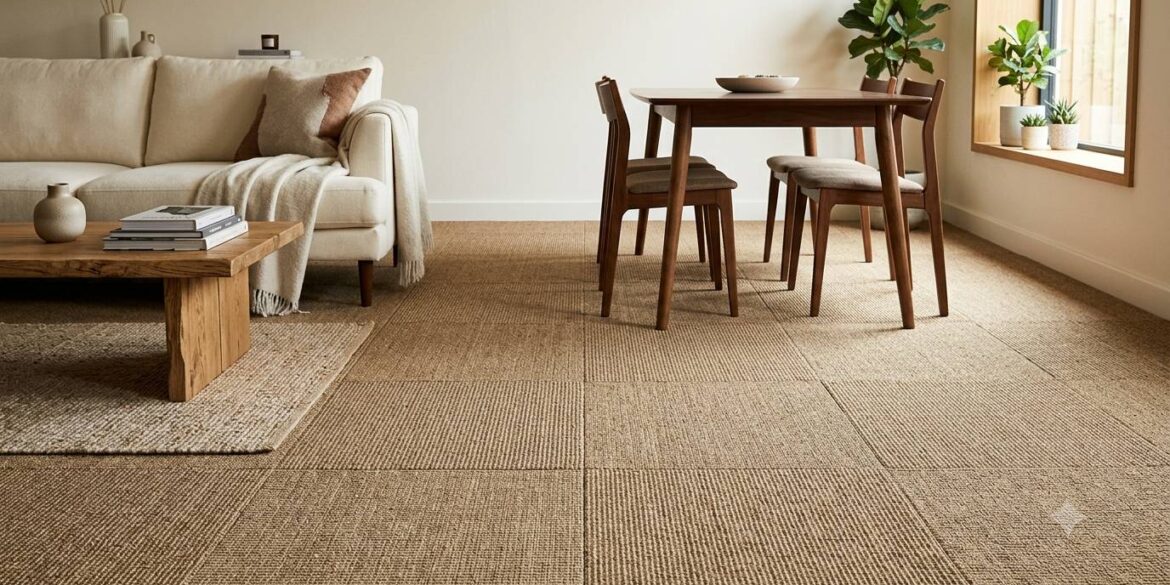
Natural fibre flooring has become an interesting choice for interiors where texture, warmth and understated design are more important than highly decorative surfaces. Among the various natural materials available, sisal has a particularly versatile character. It can be used in rugs, broad floorcoverings and, in suitable applications, tile formats.
Natural Sisal Tiles offer a different way to approach natural flooring. Rather than treating the floor as one continuous surface, tile formats introduce a modular element that can make planning, zoning and future maintenance more flexible.
For Australian homes, offices and selected commercial interiors, this format can provide an opportunity to combine the visual character of sisal with a more structured approach to floor design.
What Are Natural Sisal Tiles?
Sisal is a natural fibre derived from the leaves of the agave sisalana plant. The fibres are processed and woven or constructed into flooring products with different textures, patterns and finishes.
In tile format, these natural fibre materials are produced as individual sections rather than one continuous roll.
The exact dimensions, backing, construction and installation requirements vary between products. For this reason, it is important to consider the specifications of the particular tile rather than assuming that every sisal tile will perform in exactly the same way.
The modular format, however, creates some interesting possibilities for interior planning.
Why Choose a Tile Format?
Traditional broadloom flooring creates a continuous surface across a room. Tiles approach the same design problem differently.
Individual sections can be arranged according to the requirements of the space. This can be useful when working with larger rooms, irregular areas or interiors where different zones need to be visually defined.
Tile formats can also make it easier to plan flooring around practical constraints such as room dimensions, furniture layouts and access areas.
Rather than selecting a floor simply by colour, designers and homeowners can consider the relationship between tile direction, texture, room proportions and surrounding materials.
Creating Zones in Open-Plan Interiors
Open-plan living and working spaces are increasingly common.
Removing walls can make an interior feel larger, but it can also make it difficult to visually distinguish between different functions.
Flooring can help solve this problem.
For example, a large open room might include a living area, dining zone and work area. Carefully planned flooring layouts can create subtle visual boundaries without introducing physical partitions.
With natural sisal tiles, changes in direction, pattern or surrounding flooring can help define these zones.
The objective does not have to be dramatic contrast. Sometimes a subtle change in texture or layout is enough to give each area its own identity.
Natural Texture Without Heavy Patterns
Sisal has a naturally textured appearance, which can add depth without relying on elaborate printed designs.
This can be particularly useful in contemporary interiors where the overall aesthetic is deliberately restrained.
White or neutral walls, timber furniture, simple cabinetry and natural fabrics can all work alongside textured sisal flooring.
The floor provides visual interest while allowing the rest of the room to remain relatively uncomplicated.
This is one reason natural fibre flooring can work particularly well in interiors influenced by minimalist, Scandinavian, coastal or contemporary design.
Planning the Layout
One of the advantages of tiles is the ability to think about the floor as a layout rather than simply a surface.
Before installation, it is worth considering:
- The dimensions and shape of the room
- The direction of natural light
- Major furniture positions
- Doorways and circulation routes
- Transitions to other flooring
- Areas likely to experience greater traffic
- The desired visual direction of the tile pattern
Even a relatively simple layout can change how a room is perceived.
A consistent direction may make a narrow area feel more visually connected, while a carefully planned change can help define a particular zone.
The best layout depends on the actual product and the characteristics of the room, so samples and installation planning are valuable before committing to the final arrangement.
Residential Applications
Natural sisal tiles can be considered for a range of residential environments where their appearance and construction are appropriate.
Living rooms are one possibility, particularly in homes where natural textures form part of the interior design.
Home offices can also benefit from flooring that looks refined without becoming visually dominant.
Hallways, studies and other defined areas may provide further opportunities, depending on traffic, moisture and product specifications.
Bedrooms can also use natural fibre flooring where the homeowner prefers texture and a more organic aesthetic.
However, the tactile qualities of sisal should always be considered. It does not have the same soft sensation as plush carpet, so personal preference is an important part of the decision.
Commercial Interiors
The modular nature of tile flooring can be particularly interesting in commercial environments.
Offices, meeting rooms, reception areas and selected retail or hospitality interiors often require flooring that works with furniture, circulation patterns and changing layouts.
A tile format can provide flexibility in how different areas are visually organised.
For example, an office may use one flooring layout for open workstations and another to distinguish meeting or collaboration spaces.
The flooring becomes part of the interior planning rather than simply a background material.
Commercial environments also need careful consideration of traffic levels, cleaning requirements, furniture movement and the manufacturer’s recommendations for the selected product.
Thinking About High-Traffic Areas
Not every part of a building experiences the same level of use.
Entrances, corridors, circulation routes and areas around desks or reception counters may experience considerably more movement than quieter sections of an interior.
This makes zoning particularly useful.
Rather than treating the entire floor as though every area has identical requirements, designers can assess how each section will actually be used.
Natural sisal tiles may be appropriate in certain areas depending on the product specification and intended traffic conditions, but selection should always be based on suitability rather than appearance alone.
Maintenance and Individual Sections
One practical feature of modular flooring is that the floor is made up of separate sections.
In some circumstances, this can simplify maintenance planning because individual areas can be identified more easily.
However, this does not mean that every damaged tile can automatically be removed and replaced. Installation method, product construction, colour variation and availability of matching material all need to be considered.
Natural fibres can also develop character over time. Changes in appearance caused by normal use may become part of the overall aesthetic.
Regular maintenance remains important, particularly in areas where dirt and dust are brought onto the floor.
Protecting Natural Fibre Flooring
A sensible maintenance programme begins before the flooring is installed.
Entrance design, furniture placement and regular cleaning can all influence the longevity and appearance of a natural floor.
Using suitable entrance mats can help reduce the amount of outdoor dirt carried into the main interior.
Furniture should also be considered carefully. Heavy pieces, chairs and items that are moved frequently can place additional stress on flooring.
Where appropriate, furniture protection and sensible movement practices can help reduce unnecessary wear.
Cleaning procedures should always follow the recommendations supplied for the specific sisal tile because natural fibre products can differ in construction and care requirements.
Natural Variation and Appearance
One of the defining characteristics of natural sisal is that it is not completely uniform.
The fibre can contain subtle differences in colour, texture and weave. These variations can give the flooring a more natural appearance than highly manufactured surfaces.
For homeowners used to perfectly consistent synthetic flooring, this may require a slight change in expectations.
Natural variation is often part of the appeal.
It can make a floor feel more connected to the materials from which it was made and can also complement interiors that use timber, stone, leather, wool, linen and other natural materials.
Combining Sisal Tiles with Other Flooring
Modular flooring does not have to occupy an entire property.
In some interiors, natural sisal tiles can be combined with timber, stone, ceramic surfaces or other flooring materials.
Transitions should be planned carefully so that differences in height, texture and colour are considered from the beginning.
This approach can be especially useful in open-plan spaces.
A hard surface may be appropriate around a kitchen or another area where frequent spills are expected, while a natural fibre floor can provide warmth and texture in a nearby living or working zone.
The transition between the two should feel intentional and visually balanced.
Choosing Colour and Texture
Natural sisal is available in a range of visual treatments, depending on the manufacturer and construction.
Neutral shades remain versatile because they can work with changing furniture and interior colour schemes.
However, the most suitable colour is not necessarily the lightest or darkest option.
Room size, natural light, furniture colour and expected usage should all be considered.
It is also worth viewing a physical sample in the actual room. Natural fibres can look different under showroom lighting compared with natural daylight at home or in an office.
Sustainability and Material Choices
Interest in natural flooring is often connected with a broader interest in material selection and responsible interior design.
Choosing a plant-based fibre can form part of that conversation, but sustainability should not be judged by the material alone.
Product construction, backing materials, manufacturing processes, transportation, installation and expected lifespan can all influence the overall environmental impact of a flooring product.
For this reason, homeowners and businesses should look beyond a simple “natural versus synthetic” comparison and consider the complete product and its intended lifespan.
Is Natural Sisal Tile Flooring Right for Every Space?
The answer depends on the space.
A flooring material should be selected according to how the room will actually be used rather than simply how attractive it looks in a photograph.
Consider the expected traffic, moisture exposure, maintenance routine, furniture, comfort requirements and surrounding materials.
Sisal tiles may be particularly appealing where texture, natural character and modular design are important. In other areas, a different flooring material may be more appropriate.
Good flooring design is therefore less about finding one material for every room and more about selecting materials that suit the individual requirements of each space.
A Flexible Way to Use Natural Fibre
Floorspace Natural Sisal Tiles provide an interesting alternative to conventional flooring formats. Their combination of natural texture and modular construction allows designers and homeowners to approach floor planning with greater attention to zones, proportions, transitions and practical use.
They can work particularly well in interiors where natural materials, understated colours and tactile surfaces are part of the overall design language.
For those exploring natural fibre flooring options in Melbourne, Floorspace serves Melbourne and surrounding suburbs with a range of flooring solutions, making it possible to consider natural sisal and other fibre options according to the character and requirements of each interior.